
Revolutionizing Catheter Securement with Adhesives
A New Era in Patient Care

Catheter securement may seem like a small detail in the vast landscape of medical care, but its impact on patient outcomes, infection rates, and healthcare costs is anything but minor. Traditionally, securing catheters has relied on sutures, tapes, or mechanical devices—methods that often come with drawbacks like skin irritation, accidental dislodgement, and increased risk of infection. Enter the game-changer: advanced medical adhesives.
The Problem with Traditional Securement
Catheters are essential for delivering medications, fluids, and nutrition, but their placement is only half the battle. Poor securement can lead to:
- Catheter migration or dislodgement, compromising therapy
- Skin damage from repeated tape removal
- Increased risk of bloodstream infections
- Patient discomfort and anxiety
These issues not only affect patient safety but also drive-up healthcare costs due to complications and extended hospital stays.
Adhesives: A Smart, Skin-Friendly Solution
Recent innovations in adhesive technology are transforming how catheters are secured. These new adhesives are:
- Gentle on skin, reducing irritation and trauma
- Strong and flexible, maintaining securement even with patient movement
- Moisture-resistant, ensuring reliability in various clinical environments
- Designed for easy removal, minimizing pain and skin damage
Some products even incorporate antimicrobial properties, adding an extra layer of protection against infection.
Clinical Evidence and Outcomes
Studies have shown that adhesive-based securement systems can:
- Reduce catheter-related bloodstream infections (CRBSIs)
- Lower rates of accidental dislodgement
- Improve patient satisfaction
- Decrease the need for frequent dressing changes
Hospitals adopting these systems report fewer complications and smoother workflows for nursing staff.
Integration into Practice
Transitioning to adhesive securement requires:
- Training for clinicians on proper application and removal
- Evaluation of product compatibility with different catheter types
- Patient education, especially for long-term catheter users
But the payoff is significant: better outcomes, happier patients, and more efficient care.
Product Spotlight
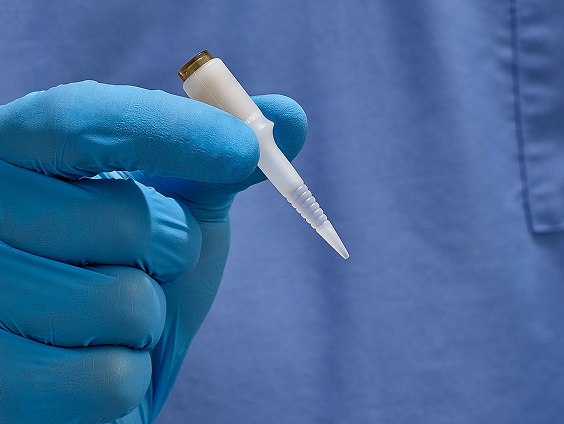
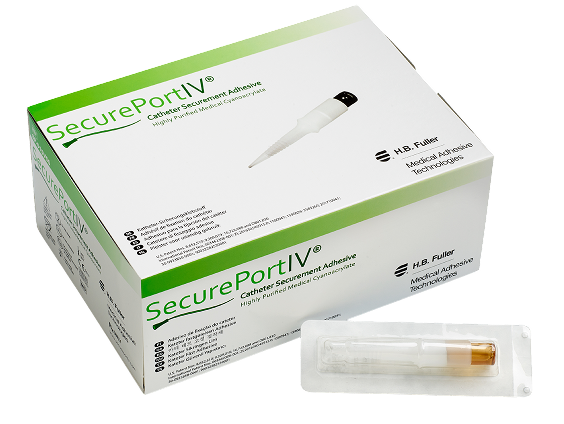
SecurePortIV® adhesive is the first and only cyanoacrylate adhesive that is FDA-cleared for securement of vascular access devices. It is simple, safe and effective for all patient populations and vascular access devices (VADs). SecurePortIV adhesive is gaining attention in clinical settings because it offers a compelling alternative to traditional catheter securement methods.
Here’s why it’s being adopted:
1. Infection Prevention Benefits - By sealing the insertion site and minimizing catheter movement, SecurePortIV helps reduce the risk of catheter-related bloodstream infections (CRBSIs). The adhesive acts as a microbial barrier, which is especially valuable in high-risk patients.
2. Improved Patient Comfort - SecurePortIV is minimally invasive and more comfortable for patients. It avoids skin trauma from repeated dressing changes and reduces pain during removal.
3. Streamlined Clinical Workflow - SecurePortIV simplifies the securement process, saving time for clinicians. It also reduces the frequency of dressing changes and interventions due to catheter complications, improving overall efficiency.
4. Cost-Effectiveness - Though the upfront cost may be higher than tape or sutures, SecurePortIV can reduce downstream costs by lowering infection rates, minimizing complications, and shortening hospital stays.
The Future of Securement
As adhesive technologies continue to evolve, we may see:
- Smart adhesives that monitor skin condition or catheter position
- Biodegradable options for sustainability
- Customizable securement systems tailored to individual patient needs
The revolution is just beginning—and it’s sticking.
The Future of Securement
1. National Institute for Health and Care Excellence (NICE). (2020). SecurePort IV for securing central venous catheters. Medtech Innovation Briefing [MIB219]. https://www.nice.org.uk/advice/mib219
2. Silva, R. C., & de Oliveira, A. C. (2021). Comparative study of adhesive devices versus elastic bands for urinary catheter securement in critically ill patients. Revista Brasileira de Enfermagem, 74(Suppl 1), e20200756. https://doi.org/10.1590/0034-7167-2020-0756
3. Pittiruti, M., & Scoppettuolo, G. (2019). Clinical experience with subcutaneous anchoring systems for central venous catheters: A comparison of SecurAcath and adhesive securement devices. Journal of Vascular Access, 20(6), 657–664. https://doi.org/10.1177/1129729819856460
4. National Institute for Health and Care Excellence (NICE). (2020). SecurePort IV for securing central venous catheters. Medtech Innovation Briefing [MIB219].