
Topical Skin Adhesives: Closing the Gaps for Wound Closure

For years, stitches and staples have been the go-to methods for closing wounds. While effective, they can be painful, time-consuming, and sometimes leave noticeable scars. Topical skin adhesives offer a different approach. These medical-grade glues form a strong, protective seal over the wound, holding skin edges together as the body heals. Patients often experience less discomfort, and clinicians can achieve closure more quickly in certain cases.
A Trusted History in Medicine
The use of cyanoacrylate chemistry in medicine has a long and fascinating history. In veterinary care, adhesives were repairing bones, hides, and even tortoise shells by the early 1970s. During the Vietnam War, medics carried cyanoacrylate sprays to control bleeding, buying soldiers valuable time until they reached surgical care. Medical adoption took longer in the U.S. because of early concerns about skin irritation. However, by 1998, the FDA approved Dermabond® (2-octyl cyanoacrylate), marking a turning point in human wound closure. Since then, topical adhesives have earned a permanent place in emergency rooms, operating theaters, and outpatient clinics.
Most topical skin adhesives today are based on either Butyl or Octyl chemistry, each with unique advantages:
- Butyl formulations polymerize (harden into a strong seal) when they come into direct contact with tissue, blood, or fluid.
- Octyl formulations activate when two specific ingredients interact. They generally create a more flexible bond, which can be beneficial in areas where the skin stretches or flexes, like joints.
These differences give clinicians options. Depending on wound size, location, and patient needs, one formulation may be better than the other. Both, however, share the advantage of reducing additional trauma caused by needles or staples.
When closing a wound, it is important to consider the strength of the bond, the flexibility of the bond, and the “set time” (the time it takes for a glue to cure). Let’s consider for a moment why each of these attributes might be important. Strength is essential because the adhesive must be able to hold the edges of the wound together. Flexibility, which is closely related to strength, allows for the adhesive to adapt as the skin is stressed or flexed. Finally, set time is essential because we need to be able to treat the wound quickly without waiting for the glue to set or sutures to be put in place.
Let’s take a deeper dive into two of the options we offer today.
SurgiSeal® Topical Skin Adhesive
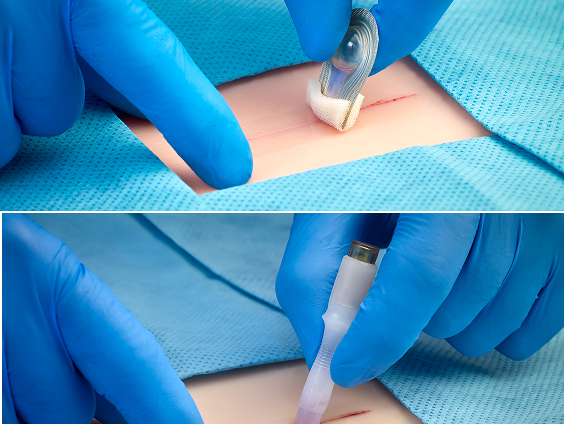
Among the modern adhesives available, SurgiSeal® Topical Skin Adhesive stands out for its ease of use and versatility. It is designed with clinicians and patients in mind, offering benefits that extend beyond basic wound closure:
- Quick application: Adhesive flows smoothly from its applicator and sets in seconds, saving valuable time in urgent care settings.
- Patient comfort: No sutures or staples mean less procedural pain and fewer follow-up removals.
- Infection prevention: The SurgiSeal adhesive formula is the only topical skin adhesive in the world to receive FDA 510k Clearance in demonstrating inhibition of gram-positive and gram-negative bacteria growth.
- Versatile options: Available in both 0.35 mL and 0.5 mL applicators, it accommodates different wound sizes and clinical environments.
By combining secure closure with infection control, SurgiSeal adhesive reflects how far wound care has advanced—transforming what was once a painful experience into a faster, more comfortable process for patients.
Histoacryl® Flexible
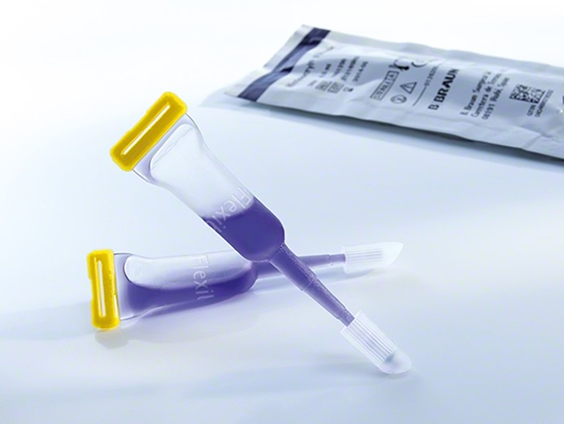
Histoacryl® Flexible is a topical tissue adhesive that delivers secure wound closure and an effective microbial barrier—without the pain of sutures.
- Easy to see - Blue color makes it easier to see application thickness
- Precise - Applicator tip allows smooth, controlled layers
- Fast & efficient - Quicker than sutures, with time and cost savings
- Patient comfort - No needle holes, less pain, and no suture removal
- Proven results - Strong closure, microbial protection, excellent cosmetics
With Histoacryl® Flexible, you get the strength and speed of a butyl adhesive plus the flexibility of an octyl—all in one trusted solution.
Key Takeaways
- Topical skin adhesives are medical-grade glues that close wounds without stitches or staples.
- They have a long history of proven use, from battlefield medicine to modern hospitals.
- Butyl and Octyl chemistries each offer unique benefits for different types of wounds.
- Products like SurgiSeal® and Histoacryl® highlight how adhesives can improve patient comfort, speed up procedures, and provide added infection protection.
References/Resources
1. Nam, Sungmin; Mooney, David (2021). "Polymeric Tissue Adhesives". Chemical Reviews. 121 (18):1133611384. doi:10.1021/acs.chemrev.0c00798. PMID 33507740. S2CID 231761847.
2. Harris, Elizabeth A. (28 March 2011). "Harry Coover, Super Glue's Inventor, Dies at 94". The New York Times. Retrieved 30 June 2018.